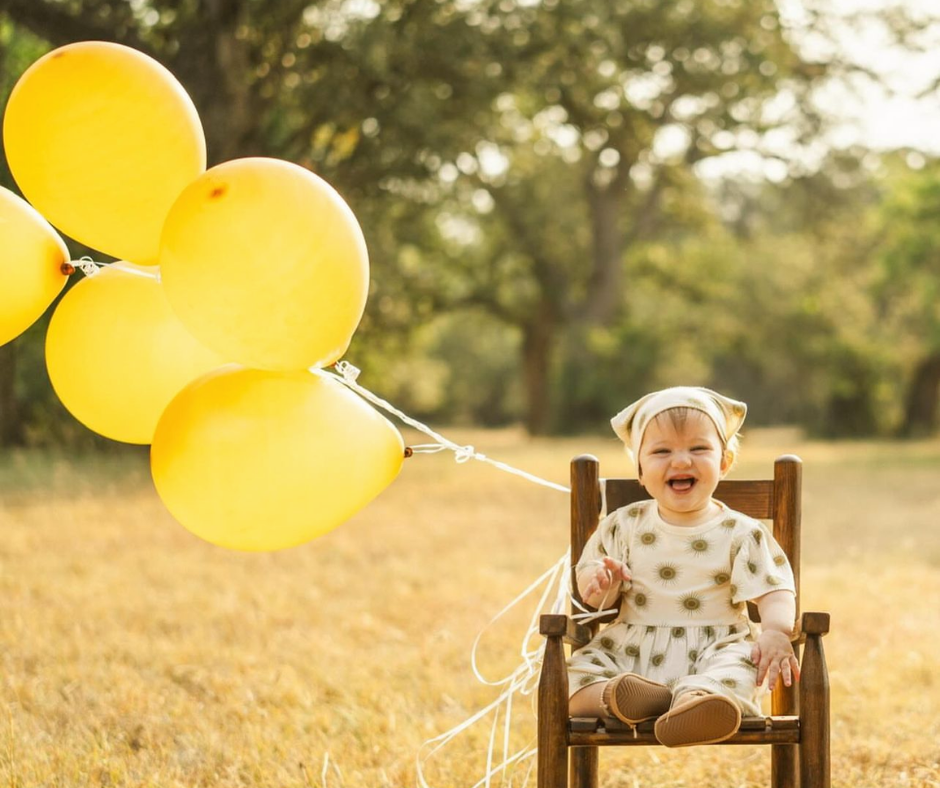


When Should Your Toddler Start Wearing Boots? A Fall Footwear Guide for First Walkers
There's a particular October morning every parent knows. You step outside with your coffee, the air has that crisp edge, and you look down at your toddler's feet — still in sneakers or sandals from summer — and think: is it boot time yet?
If you're asking the question, you're already doing great. Here's the honest, mom-to-mom answer: there's no magic date on the calendar, and there's no magic age either. It comes down to your little one's stage, the weather where you live, and — most importantly — what the boots are like on the inside.
P.S. Sizing questions? Our size guide has you covered — and if you're between sizes with room to grow in mind, we're always happy to help you pick.
At what age should babies start wearing boots?
Here's the part that surprises most parents: it's not about age at all. A 10-month-old who's cruising furniture and a 15-month-old who's running across the playground are in completely different footwear chapters, even though they're only months apart. What matters is:- Pre-walkers (not yet walking on their own): skip structured boots entirely. Soft soles or bare feet are best — they need to feel the ground to build balance and foot strength.
- New walkers (those first wobbly months): they can wear boots outdoors in cold weather, but the boots need to behave like they're barely there — soft, flexible, lightweight.
- Confident toddlers: sturdier boots are fine for real weather, but the same rules about flexibility and fit still apply.
Are boots bad for first walkers?
This is the question I hear most, and I get why it causes anxiety. We've all heard that barefoot is best for developing feet — and that's true! Little feet are mostly soft cartilage, and they get stronger by gripping, bending, and feeling different surfaces. But "barefoot is best" doesn't mean "barefoot in 45-degree weather." Boots aren't bad for first walkers — the wrong boots are. The ones to avoid are stiff, heavy, narrow boots that hold the foot rigid like a cast. Those can genuinely get in the way of the balance and muscle development those first steps are building. The right boots protect from the cold while letting feet do what they'd do barefoot: bend, flex, and feel the ground. That's the whole philosophy behind barefoot-friendly footwear, and it's what to shop for.What should toddlers wear on their feet in cold weather?
The layering principle that works for their bodies works for their feet, too:- Start with socks. A good pair of socks does more warming work than most parents expect. For crisp fall days, socks + a soft-sole shoe are often plenty.
- Add boots when the ground is cold, wet, or both. Cold seeps up from pavement fast, and little feet chill quicker than ours. If you'd be uncomfortable in sneakers, they need boots.
- Don't overdo it. Sweaty feet get cold faster than dry feet. If their feet are damp when you take boots off, the boots are too warm for the day (or the socks aren't breathable).
How should toddler boots fit?
Fit is where most boot mistakes happen — and with toddlers, who can't tell you "these pinch," it matters even more. Here's my fitting checklist:- The thumb-width rule: press your thumb down in front of their longest toe. You want about a thumb's width (roughly half an inch) of wiggle room. Feet grow fast, but too much room makes them trip.
- Shop in the afternoon. Feet swell a little during the day, just like ours.
- Fit with the socks they'll actually wear. Fitting in thin socks and then adding chunky winter socks at home is a classic mistake.
- Check the heel. You should be able to slip one finger in behind the heel — snug enough to stay on, loose enough not to rub.
- Watch them walk. New boots shouldn't change how they walk. If they're suddenly stomping, shuffling, or asking to take them off, something's wrong with the fit or the flexibility.
What to look for in a toddler fall boot
Screenshot this for your next shopping trip:- ✅ Flexible sole — you should be able to bend and twist it easily in your hands
- ✅ Lightweight — heavy boots tire little legs fast
- ✅ Wide toe box — toes should be able to spread, not squeezed together
- ✅ Stays on — elastic, laces, or a snug ankle; boots that fly off at the playground help no one
- ✅ Easy on/off — because you'll be doing it approximately 47 times a day
- ✅ A little room to grow — that thumb's width, not three
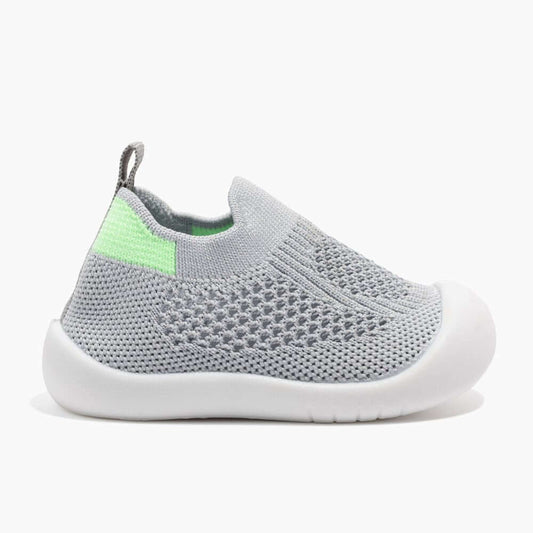
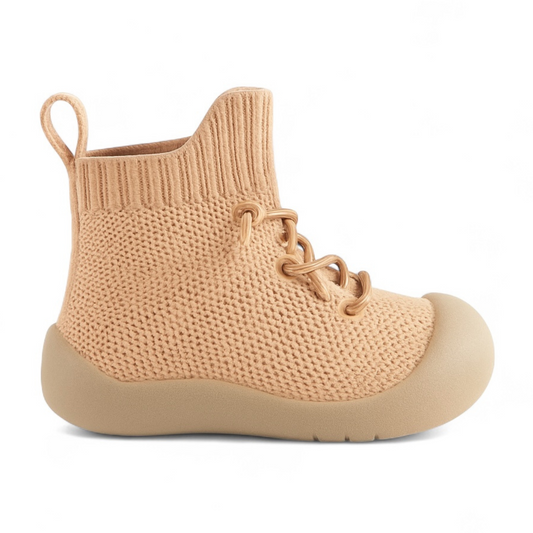
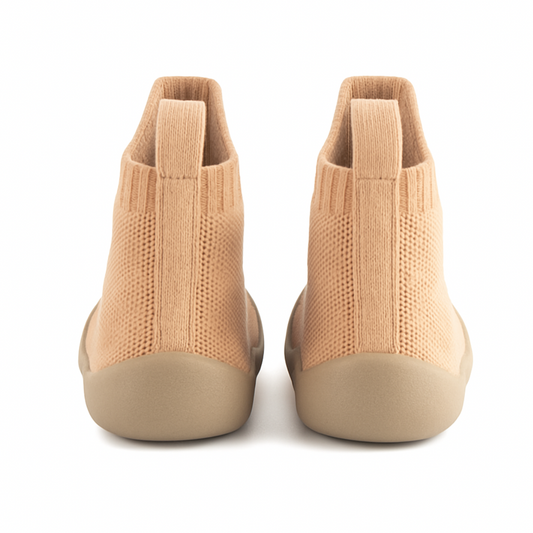
Our pick for fall: the Park Boss Boot
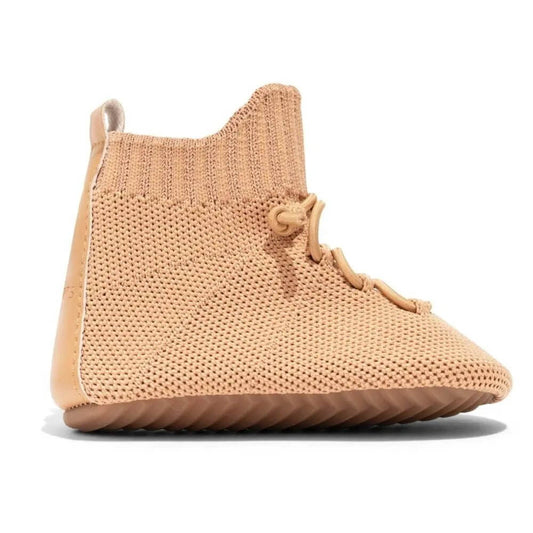
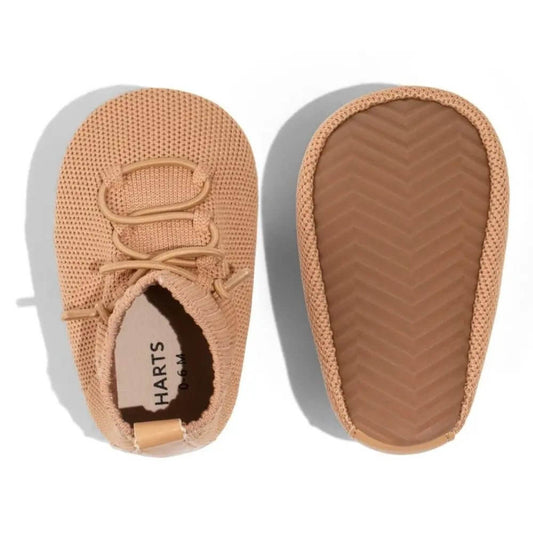
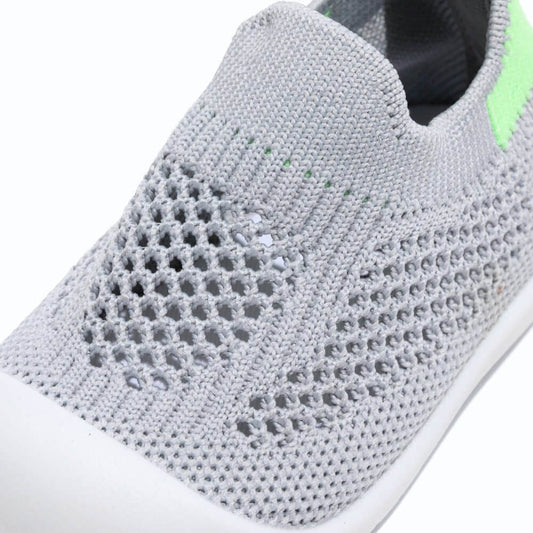
I'll keep this short, because this post is genuinely about the how, not the what. But since you're here: we designed the Park Boss Boot (Toddler) for exactly this season of life. The sole is soft and flexible so new walkers can still feel the ground, the knit upper is lightweight and breathable, and they actually stay on — which, if you know, you know. They're $59 and built for first walkers finding their footing this fall. Whatever boots you choose, here's the thing I want you to take away: trust the wobble. Those unsteady first steps in the fallen leaves are doing exactly what they're supposed to do. Keep their feet warm, keep their soles flexible, and let them stomp through every puddle October has to offer. 🍁P.S. Sizing questions? Our size guide has you covered — and if you're between sizes with room to grow in mind, we're always happy to help you pick.