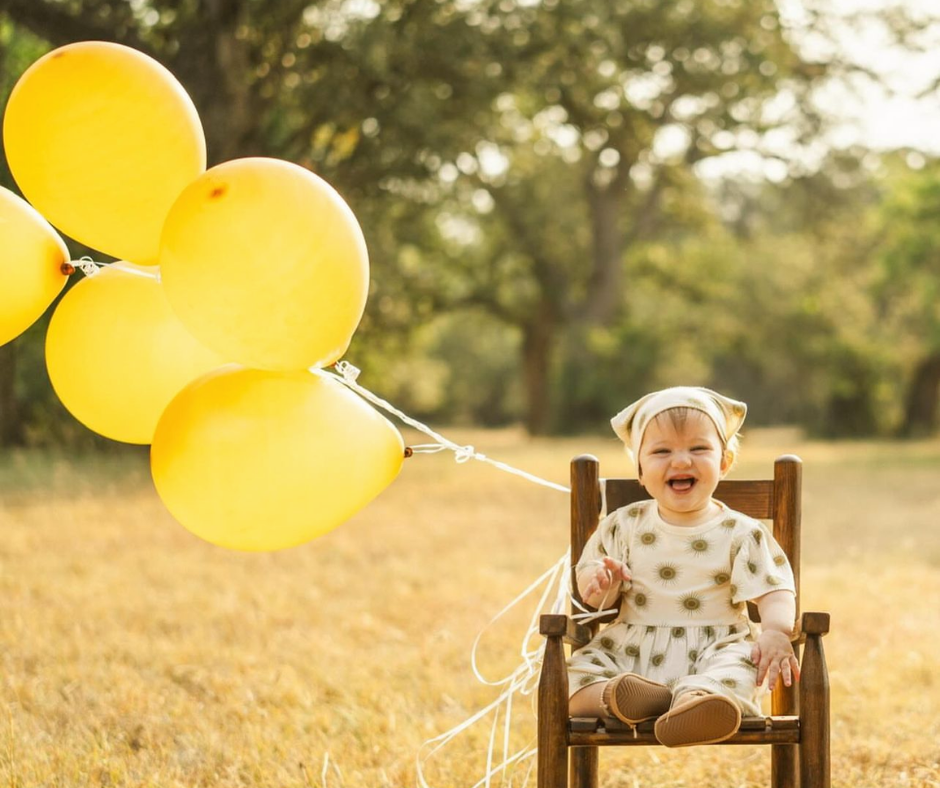


Should Toddlers Wear Shoes Inside the House?
You know the scene. Shoes off at the door — or, more likely, one shoe off at the door, one shoe under the couch, and a barefoot toddler sprinting across the kitchen floor. And then the question pops up, usually right around the time someone visits and raises an eyebrow: should they be wearing shoes inside the house?
Short answer: most of the time, barefoot at home is wonderful. But "most of the time" is doing a lot of work in that sentence. Here's the honest, mom-to-mom version — when bare feet win, when a little something on their feet actually helps, and what to look for on the days shoes make sense indoors.
Is it bad for toddlers to wear shoes indoors?
No — wearing shoes inside isn't harmful. The thing to watch isn't whether they wear shoes indoors, it's what kind of shoes. Stiff, heavy, rigid shoes are the problem: they change how a little one walks, muffle the feedback their feet get from the ground, and turn a confident walker into a stomper.
Bare feet, on the other hand, do a lot of quiet work. When toddlers walk barefoot, they feel the floor, grip with their toes, and build the balance and foot strength that good walking is built on. That's why the general guidance from pediatric sources is so consistent: barefoot is best for little feet that are still learning — at home, on safe surfaces, whenever you can.
So the rule of thumb I use: barefoot is the default. Shoes indoors are the exception, for the moments when bare feet need a little backup.
When do toddlers actually need shoes inside?
Here are the moments I reach for shoes indoors — and I bet you'll recognize most of them:
- Cold floors. Tile, hardwood, and stone floors in winter are genuinely cold, and little feet chill fast. If the floor makes your feet cold in socks, it's cold for them too.
- Slippery floors. Smooth hardwood and tile plus socked feet is a slip-and-slide. If your toddler is wiping out on the same corner twice a day, that's a shoes moment.
- Daycare or preschool rules. Plenty of programs ask for indoor shoes. (And if they do, soft-soled ones are the ask — see below.)
- Rough or messy floors. Renovation dust, a deck or patio, gravel tracked in from the yard, a floor full of older siblings' LEGO — bare feet lose that argument.
- Sensitive feet. Some little ones just don't love the feeling of cold or textured floors, and that's fine. Comfort counts.
None of these mean shoes all day, every day. It means shoes for the cold morning stretch, or the slippery kitchen, and bare feet the rest of the time.
Barefoot vs. socks vs. soft shoes at home
Think of it as a ladder, from most natural to most protected:
- Barefoot — the gold standard at home on clean, safe floors. Best for balance, grip, and foot development.
- Socks with grips — the middle ground. Warm, and the little rubber dots stop the hardwood slip-and-slide. My go-to for cold mornings when the floor isn't that cold.
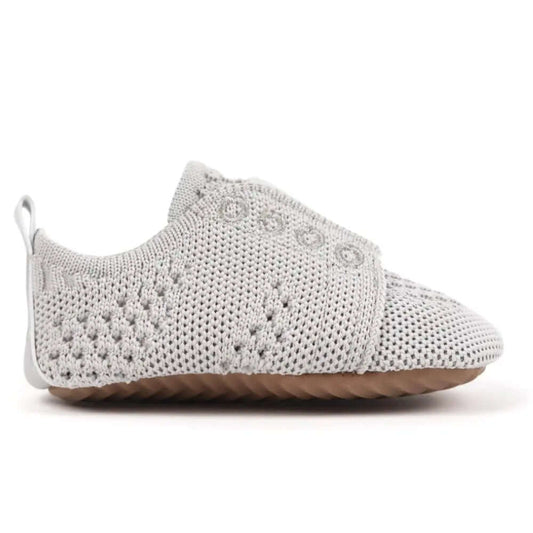
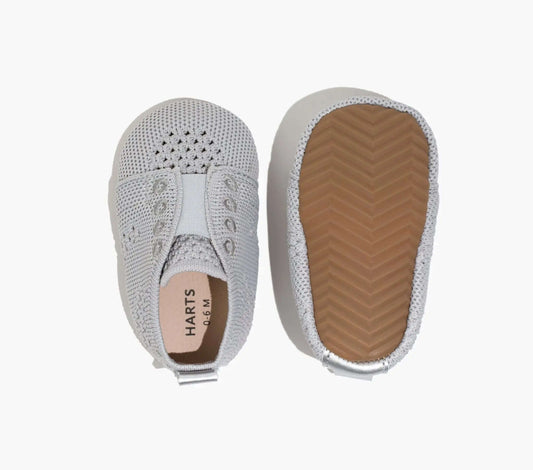
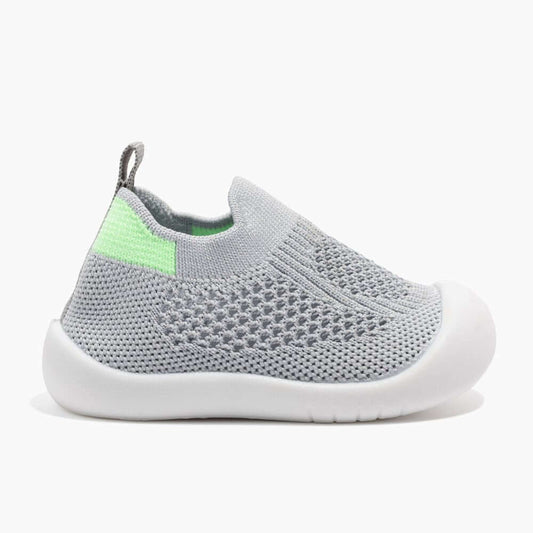
- Soft-soled shoes — for when socks aren't enough: properly cold floors, daycare rules, or a house full of hazards. The key word is soft: the sole should bend and twist easily in your hands, like a sock with a bottom.
What doesn't belong on the ladder: stiff sneakers, hard-soled boots, or anything that makes their walk change. If a shoe turns their normal walk into stomping or shuffling, it's too much shoe for indoors.
What about cold floors in winter?
This is the question that comes up every November, right on cue. A few things that actually work:
- Warm socks first. A good pair of socks does more warming work than most parents expect — start there before reaching for shoes.
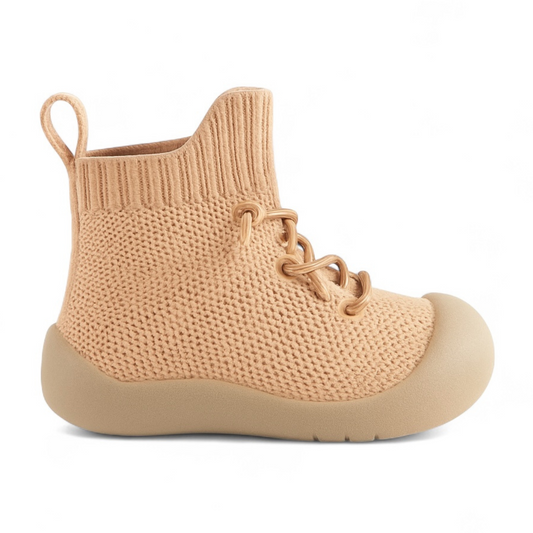
- Cover the ankles. A soft boot beats a low shoe on a cold floor simply because it closes the gap where cold air sneaks in.
- Check toes, don't guess. Little ones won't always tell you their feet are cold. A quick toe check tells you whether to add a layer or head for the rug.
- Warm the floor, not just the feet. A rug in the main play area does more than any shoe will. If your toddler lives on one cold patch of floor, that's the patch to cover.
And the counterintuitive one: don't over-layer to the point of sweaty feet. Damp feet get cold faster than dry feet. Warm and dry beats warm and sweaty every time.
What should indoor shoes for toddlers look like?
The same test as outdoor shoes, just with a lighter touch:
- Flexible sole — bends and twists easily. If you can't fold it in your hands, it's too stiff for a little foot.
- Lightweight — they should forget they're wearing them. Heavy shoes change how they walk, and then they'll want them off.
- Stays on — snug ankles and elastic beat laces that come undone (and get tripped over).
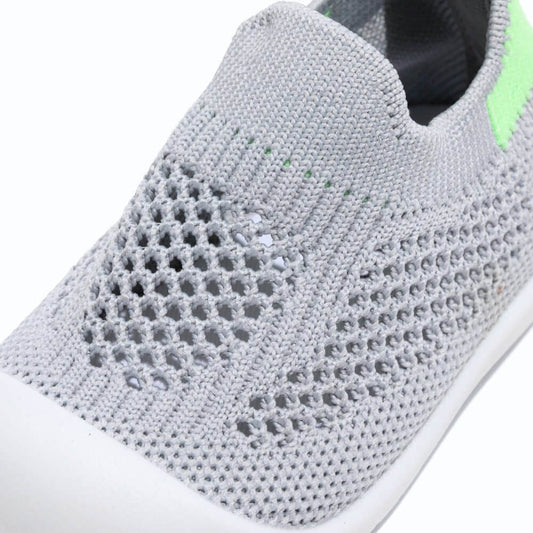
- Breathable — knit or soft leather, not plastic. Feet sweat indoors too.
- Easy on and off — because you will be taking them off at naptime, at the door, and again at bath time, probably while holding a snack cup.
If a shoe passes that test, it works indoors. If it doesn't, it's an outdoor shoe — and that's fine, just not the one for the living room.
The at-home shoe checklist
Screenshot this for the next time someone asks:
- ☐ Barefoot is the default on clean, safe floors
- ☐ Grippy socks for cold or slippery floors
- ☐ Soft-soled shoes for cold floors, daycare, or rough surfaces
- ☐ Sole bends and twists easily in your hands
- ☐ Lightweight, breathable, and actually stays on
- ☐ Quick toe check when the floor is cold — don't guess
- ☐ Shoes off for naps and at the end of the day (feet need air too)
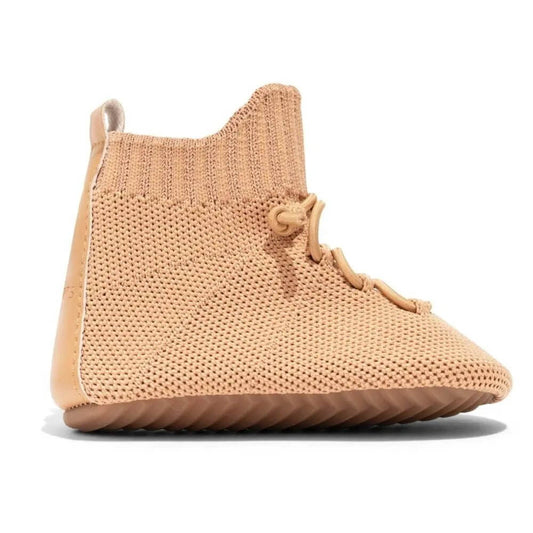
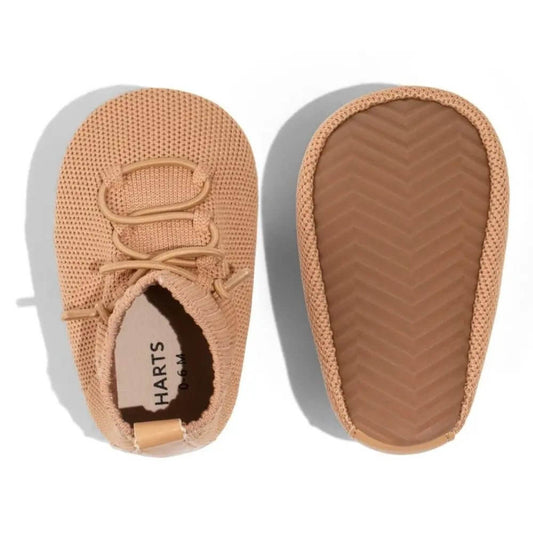
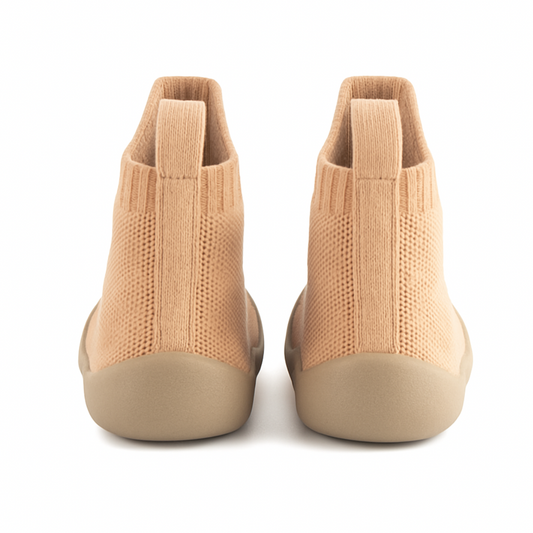
Our pick for the moments shoes are needed: the Park Boss Boot (Toddler)
I'll keep this short, because this post is genuinely about the how, not the what. But since you're here: we made the Park Boss Boot (Toddler) for exactly the in-between moments — cold floors, the run out to the car, daycare drop-off. The sole is soft and flexible so new walkers can still feel the ground, they actually stay on, and at $39 (was $59) with free US shipping, they're the pair you don't have to baby. (Pun intended. Sorry.)
Whatever your little one wears at home, here's what I hope you take away: barefoot is best when you can, a little something soft is perfect when you can't, and the goal is feet that are warm, dry, and free to move. The rest is just shoes. 👣
P.S. Sizing questions? Our size guide has you covered — and if you're between sizes with room to grow in mind, we're always happy to help you pick. And when in doubt about your little one's feet, your pediatrician knows them best.